


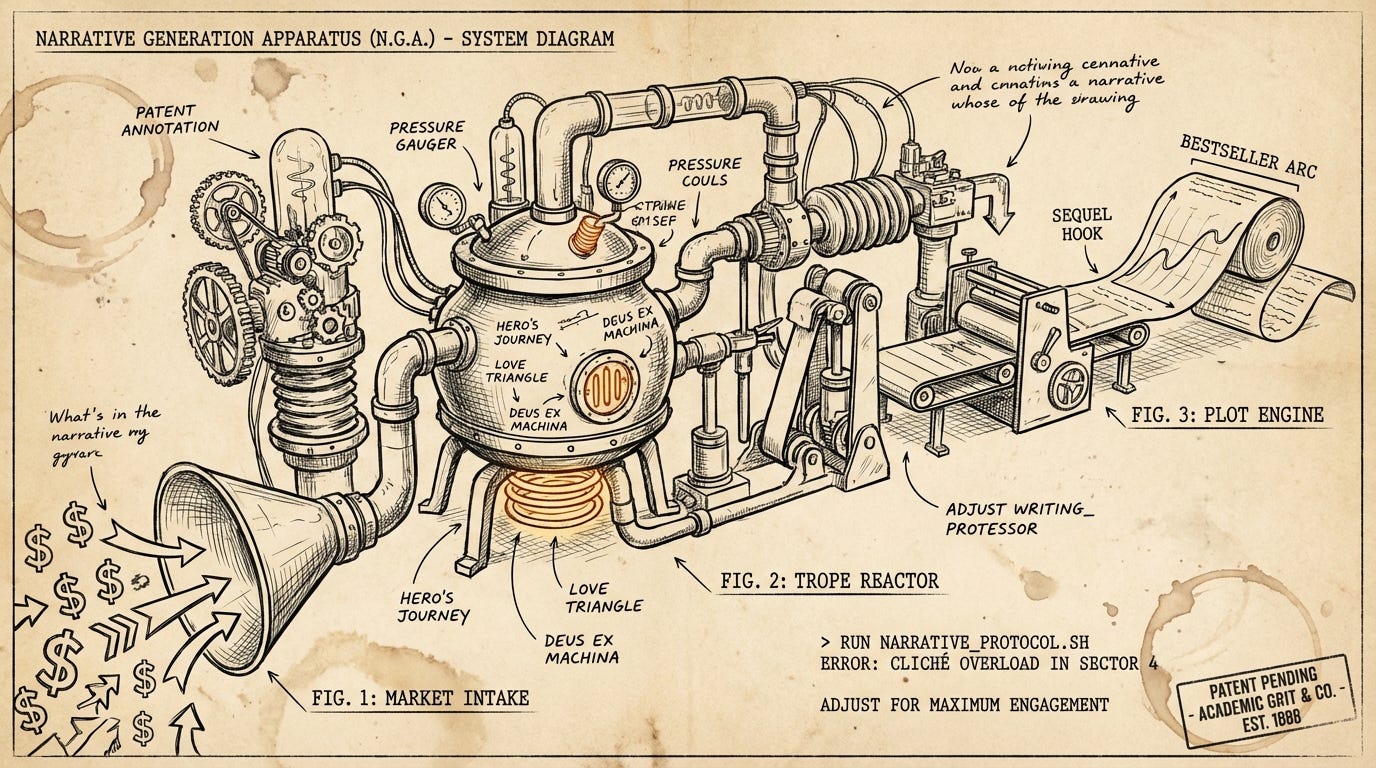
A few days ago, Ariana – a psychologist and reader here – sent me a message that hit like a bug report in production.
She wanted to know about my “outside-in” approach. She noticed I didn’t start with the “craft of writing.” I started with the engineering of it.
She’s right. And it’s time I’m honest about how I actually built this machine.
The “6-Figure” Lie
First, a disclaimer: I am not a coach. I don’t sell “freedom” or 6-figure dreams while wearing a headset. I hate that vibe.
What I am is a an engineer who got laid off and decided to reverse-engineer the Amazon black box. I’ve made mistakes. I’ve burned cash on ads that didn’t convert. I’ve written dialogue that sounded like a broken thermostat.
I’m not sharing “The Truth.” I’m sharing my logs.
They Want a Fix, Not “War and Peace”
Literary gatekeepers love to talk about the “soul of the work.” But here is what they won’t tell you: Most readers aren’t looking for high art. They’re looking for a fix.
If someone just finished a 20-book series about a female starship captain, they don’t want a prose-heavy meditation on the human condition. They want another ship. They want the tropes, the tension, and the payoff.
I don’t look for “art” when I read for fun. I look for entertainment.
There is a massive, hungry space for “decent” books that respect the reader’s time and their love for the genre. If you can provide that, you win.
Killing the 20-Year Tax
The standard advice is a death sentence: “Write shitty books for 20 years, pay your dues, and maybe one day you’ll be a Real Writer™.”
I didn’t have 20 years. I had hundreds of stories in my head, but I lacked the “craft.” I didn’t want to live in the wilderness; I wanted to tell my stories now.
AI killed the tax. The barrier between the “story in your head” and the “words on the page” has collapsed. If you approach it with care – if you actually steer the machine instead of just letting it hallucinate – you can ship books people love without waiting for permission.
Engineering the Craft
I didn’t ignore the rules. I just treated them like a technical manual.
I read The Anatomy of Story and Save the Cat Writes a Novel like I was studying a new API documentation. I applied engineering logic to narrative structure. I debugged the plot.
If you compare the first book of The Lightning War to the last, you can see the engine getting tuned. The prose is tighter. The stakes are sharper. Not because I found a “muse,” but because I optimized the pipeline.
The Mini-Course: Engineering Indie Success
Starting next week, I’m opening up my “Internal Logs.”
I’m putting together a series of posts for my paid subscribers. I’ll show you exactly how I start from the outside (the market and the process) and work my way into the production.
What we’re actually doing:
Trope-Stacking: How to build a story spec before you write a single word.
The Bridge: Using AI to turn an “Idea” into a “Draft” without losing the soul.
The Manuals: The specific books and tools that helped me “debug” my writing.
The Failure Log: The mistakes that cost me time (so you can skip them).
I’m building this for the Arianas of the world – the ones who have stories to tell but are tired of being told they’re on the “wrong path.”
Next week: Module 1 – The Market Spec. Why your blurb is actually your source code.
that's a down to earth post and a very cute image of THE one and only "engineering bestsellers" machine ;)
love both